Guangzhou Liangdian Automotive Supplies Co., Ltd.
Guangzhou Liangdian Automotive Supplies Co., Ltd.

Choosing between a Rotary Polisher (RO) and a Dual-Action Polisher (DA) can be tricky. Here's a quick guide to help you decide.
RO Polisher – The pad spins in one direction at high speed. Powerful but requires skill.
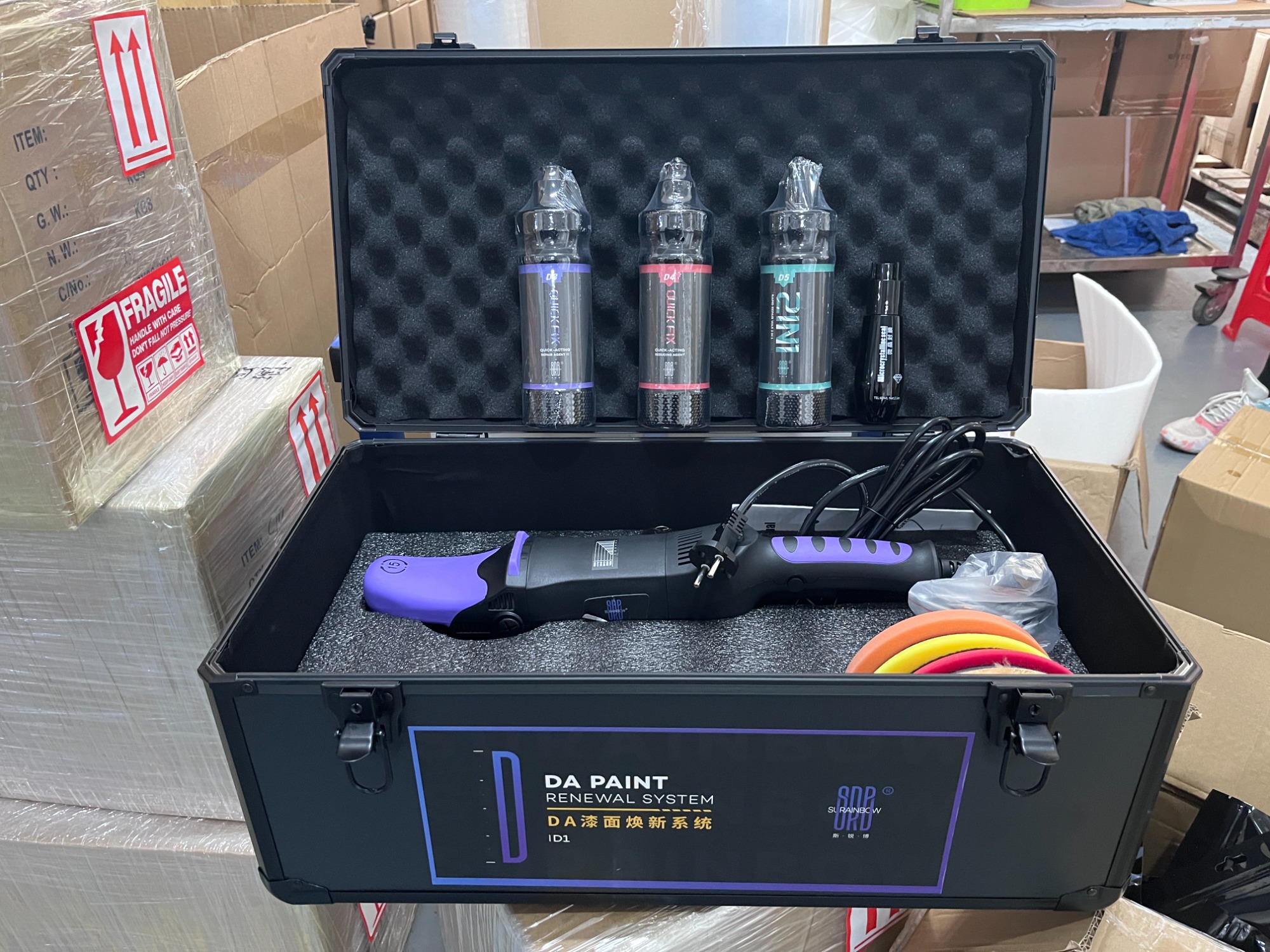
DA Polisher – The pad spins and oscillates at the same time. Safer and more forgiving.
Cutting Power – RO is strong and fast; DA is moderate and slower.
Safety – DA is beginner-friendly; RO needs experience to avoid burns and holograms.
Learning Curve – DA is easy; RO is steep.
Best For – RO handles deep scratches and heavy correction; DA handles light defects and fine finishing.
Choose RO if:
You're a professional technician
You need to remove deep scratches and heavy oxidation
You have experience with paint correction
You value speed and efficiency
Choose DA if:
You're a beginner or DIYer
You're dealing with light swirl marks and minor defects
You want a safe, risk-free tool
You're doing final finishing for that perfect gloss
"DA can't remove scratches" – Not true. It just takes more time and passes.
"Pros only use RO" – False. Most pros use both – RO for cutting, DA for finishing.
"Beginners can start with RO" – Not recommended. One mistake can burn through paint.
Beginners → Go with DA for safety.
Professionals → Go with RO for power.
Best of both → Get both if your budget allows. Each has its place, and together they're unbeatable.
Need help picking the right polisher? Contact us today!