Product Overview
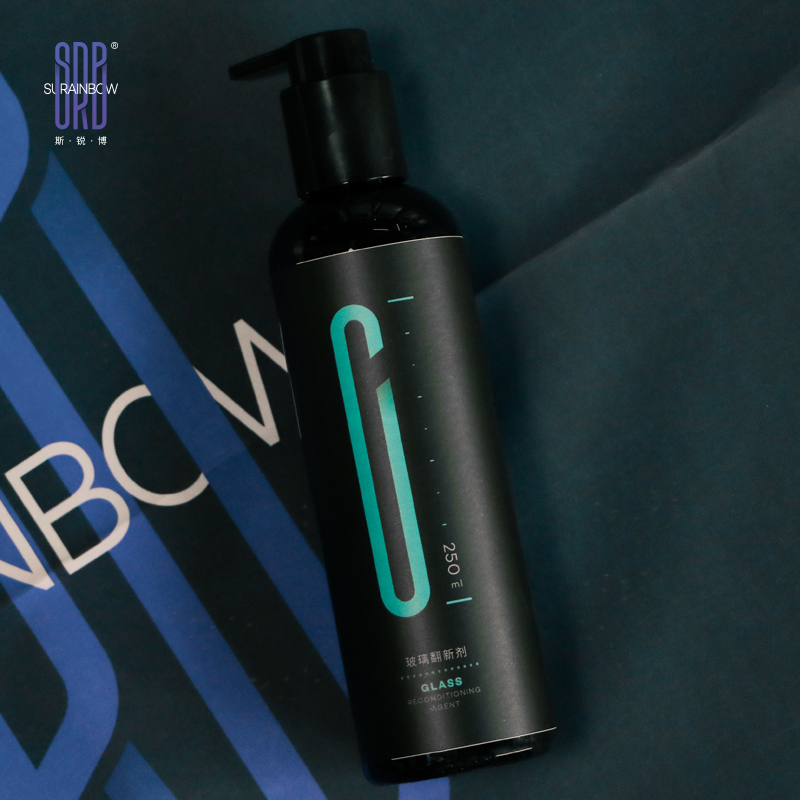
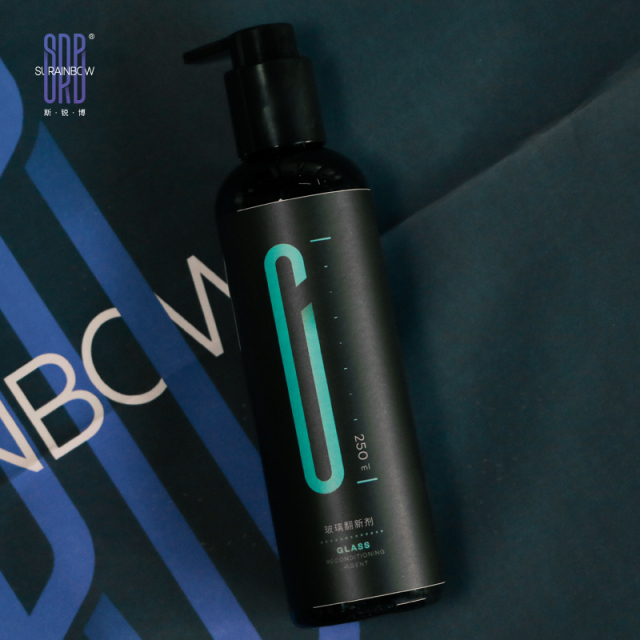
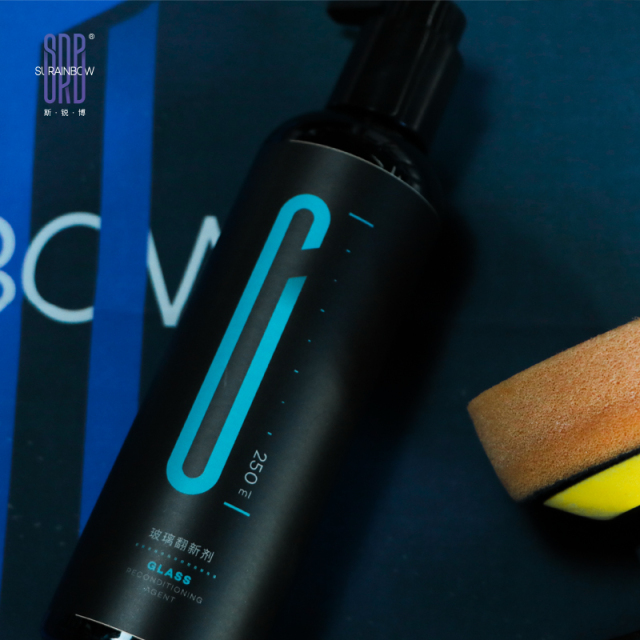
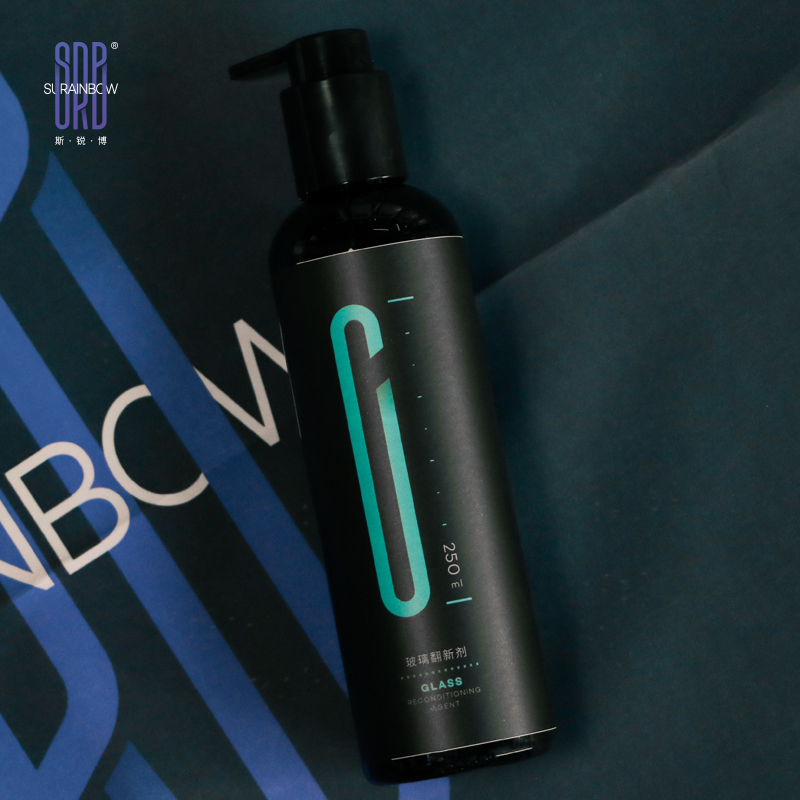
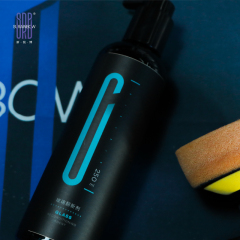
No.S-373 is a glass reconditioning agent for automotive glass, built on nano-particle material and worked into the surface with a machine rather than wiped across it. It sits between washing and coating: it lifts the mineral and oil deposits that have bonded to the glass, and the surface it leaves behind is one a coating can actually hold on to.
The difference shows in daylight. Water spots that survive a wash, the grey smear a wiper drags over the screen, the dull band where traffic film has baked on — these are surface conditions rather than dirt, and they need an abrasive disc with a machine behind it. The thinking is the same one behind a nano ceramic coating on paint: level the surface first, then protect it.
Detailing shops keep it for the windscreens that come back with the same complaint. Coating bays run it before the glass coating goes on. Fleet and dealership workshops use it on hire cars and used stock, where a clear screen is the first thing a buyer notices. In a ceramic coating car care routine it is the rescue step, the one you reach for once normal washing stops making a difference.
It is a workshop product, made to be run with the pneumatic machine and glass discs the method calls for, and it rewards an operator who works the whole panel rather than chasing single spots.
What the pass actually changes Machine polishing works on the layer the wipers touch. Fine burnish marks, the faint haze that makes a screen look tired in low sun, and the outlines left by dried water are all surface conditions — light scatters from them and no amount of wiping puts them back. The disc cuts that layer back evenly so the glass reads clear again. Deep scratches that catch a fingernail, chips and pits are a different repair, and this agent will not fill them. The coating that follows Worked into the glass, the agent leaves a protective layer behind the cleaning action. A dedicated glass coating applied afterwards extends the interval, and the pairing is what changes how the screen behaves: rain clears in one wiper pass instead of smearing, and the glass stops throwing glare back at the driver on wet nights. Drivers describe it as a screen they can see through rather than squint past, which is the safety argument a fleet buyer understands without being sold to. Why preparation decides the result A ceramic coating supplier can hand over a bottle of coating; what that coating does depends on the glass it lands on. Glass cut back evenly holds a coating better than glass with deposit still sitting on it, and the difference usually appears months later, when one screen still beads and the other has gone patchy. Where a nano ceramic coating is scheduled for a windscreen, finish it on this pass first and treat the coating as the second half of one job. Where it fits a coating bay The glass side of a full coating package is easy to underestimate: the paint gets corrected, the screen gets a quick wipe, and the customer notices the screen first. Running this pass as part of the same booking keeps the whole vehicle at one standard and gives the bay a single schedule to quote and to book.
Soils & Surface Conditions
- Hard water spots — the pale rings and outlines left when rain or wash water dries on warm glass. The mineral deposit bonds to the surface, so shampoo glides over it and the mark is back by the next dry day.
- Acid rain marking — mottled, etched patches from polluted rain that read as a dull haze in low sun and under street lighting.
- Traffic oil film — the grey-green layer that builds on a windscreen in traffic and smears every time the wipers run.
- Wiper marks — arc-shaped traces and rubber drag where the blades sweep, most obvious on the driver's side of the screen.
- Bonded surface dirt — diesel haze, dust set by mist and the everyday grime of a working vehicle that a wash bay cannot lift.
- Ordinary glass — shop windows, glass doors, mirrors and display panels respond to the same treatment, which makes the product useful to buyers supplying both the automotive and the building trades.
- Glass on a car ceramic coating schedule — the pass comes before the coating, on bare glass the coating can bond to, rather than on top of a finished layer.
- Keeping the ceramic coating benefits alive — spotting lifted early never gets the chance to bed into the surface, and that is what keeps a coated screen performing across its service interval.
Machine Application Steps
- Clean the glass first with a normal glass cleaner and dry it. The machine pass is for bonded deposits; grit under a disc will mark the surface you are trying to save.
- Work out of direct sun, on glass that has cooled. Residue dries too fast on a hot screen and the disc loads unevenly.
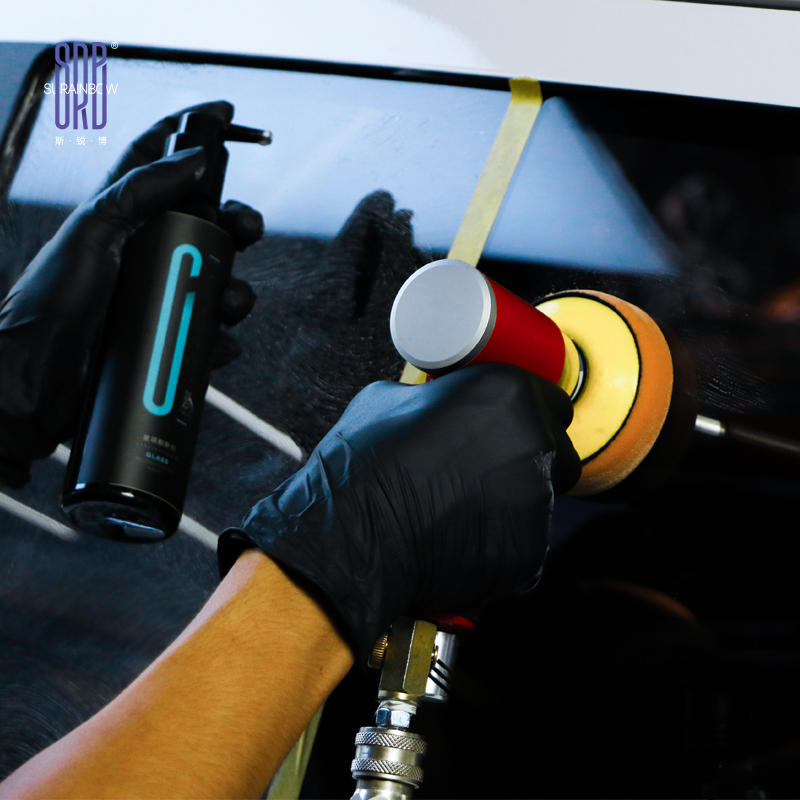
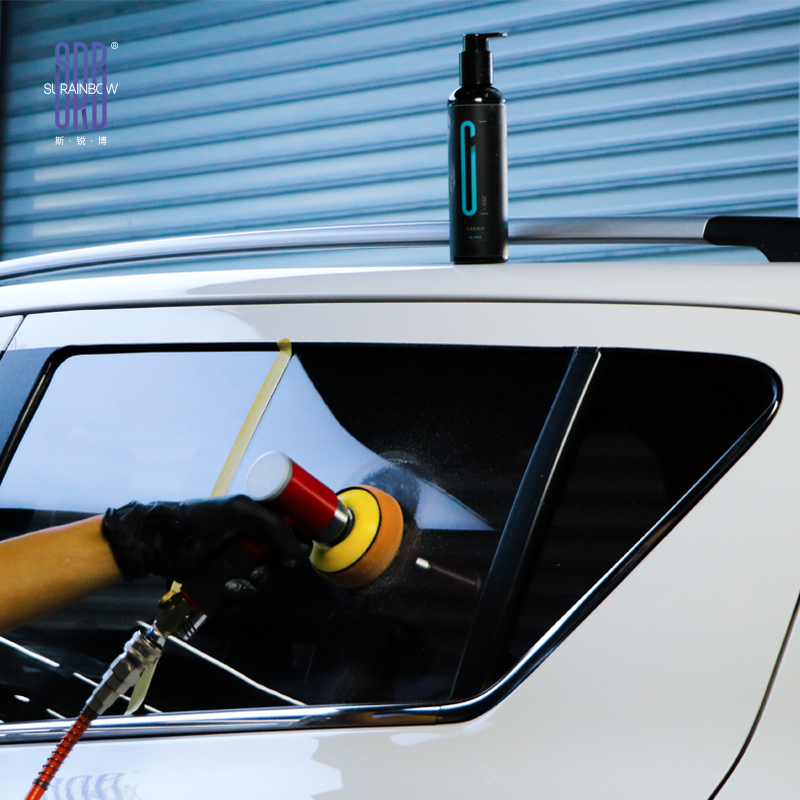
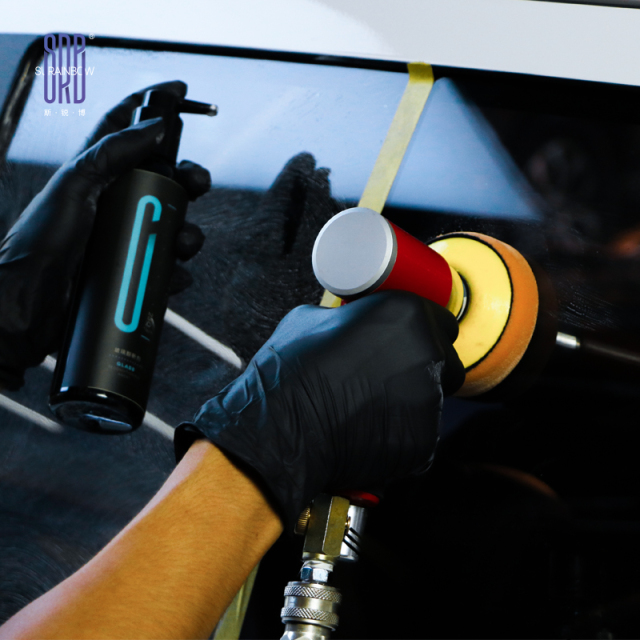
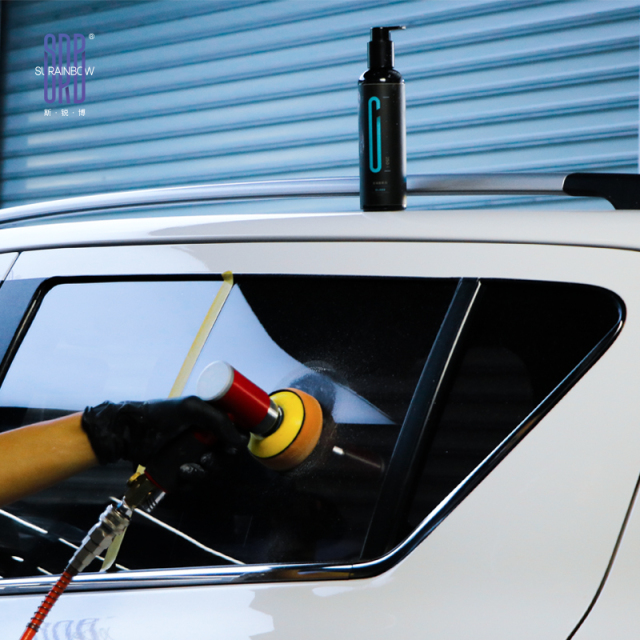
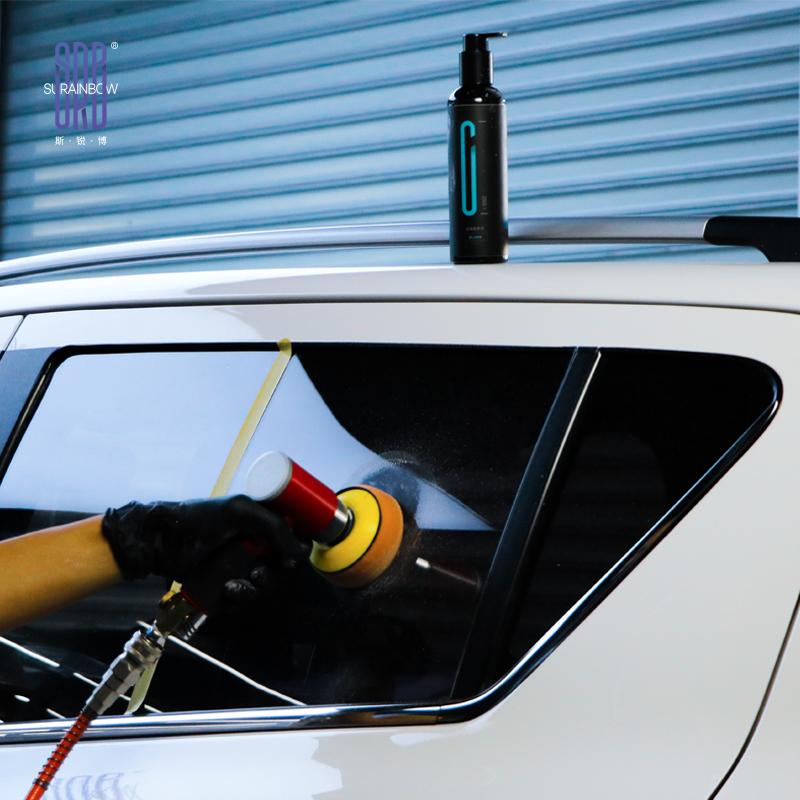
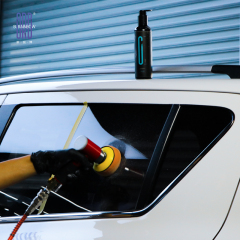
- Fit the 3-inch pneumatic waxing machine with a 3-inch glass polishing disc for the main screen, and change to the 1-inch disc at the edges and tight curves.
- Tape the rubber seals, wiper arms and painted edges. The disc should never touch them, and the tape saves more time than it costs.
- Pump a small amount of agent onto the disc. The pump bottle meters it out, so you can add as the disc loads instead of flooding the glass.
- Work in overlapping passes with the pad flat. Keep the disc moving — dwelling in one spot builds heat and leaves a shadow that shows up later.
- Lift the residue with a damp microfibre and dry the glass, then check it at an angle under a light. Spots that survive will show as outlines.
- Re-treat the stubborn areas and then run the whole panel once more so the finish is even. A half-treated windscreen looks worse in rain than an untreated one.
- Where a nano ceramic coating is booked for the same visit, hand over directly from this pass: the glass is at its cleanest and the coating has something to bond to.
- On a schedule of ceramic coating for cars, that handover is what keeps the bay moving — glass work finishes, coating starts, and the vehicle leaves on one invoice.
Tools & Consumables
| 3-inch pneumatic waxing machine | Drives the disc across the glass at a steady machine speed |
| 1-inch glass polishing disc | Edges, corners and the tight curves at the top and bottom of a windscreen |
| 3-inch glass polishing disc | Main windscreen, rear glass and side windows |
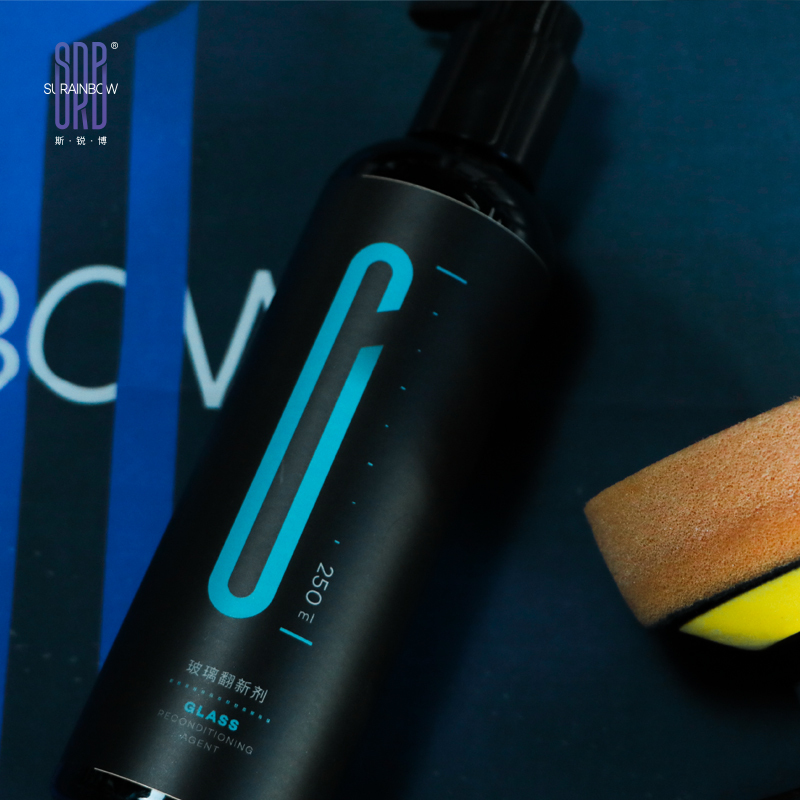
| Pump bottle | Dispenses the agent onto the disc or pad in controlled amounts |
| Sponge applicator block | Hand touch-ups around seals and along the edges of the screen |
| Masking tape | Keeps the agent and the disc off rubber seals, wiper arms and painted edges |
| Microfibre cloth | Lifts residue after each pass and dries the glass for inspection |
| Inspection light | Reveals remaining spots when the glass is checked at an angle |
Specifications
| Model | No.S-373 |
|---|
| Product type | Glass reconditioning agent; water spot and oil stain remover |
| Material base | Nano-particle material |
| Format | Pump bottle with dispenser top |
| Application | Automotive glass and ordinary glass |
| Machine pairing | 3-inch pneumatic waxing machine |
| Disc pairing | 1-inch glass polishing disc and 3-inch glass polishing disc |
| Main action | Removes water spots, acid rain marks, traffic oil film, wiper marks and bonded surface dirt |
| Finish | Clear, glossy glass, level to the eye and to the touch |
| Paint safety | Glass-only product; keep the disc off painted panels |
| Usage rate | Confirm the recommended usage or dilution for your application with your sales contact |
Sampling & Packaging Approval
- Send the brief: the glass you work on, the soils you meet in your market, and the pack format you want to test.
- Agree the sample scope, its size and any applicable sample or courier charges before dispatch, so both sides know exactly what is being evaluated.
- Run the sample on your own glass with your own machine and discs, and record the passes you used. A result you cannot repeat is not a result you can approve.
- Approve a sealed reference sample. It becomes the standard the bulk order is checked against, so keep it identified and stored.
- Send artwork in the same round: label copy, language, barcode, hazard and warning text, and carton marks.
- Proof the packaging before anything is printed — bottle, closure, label position, carton and shipping marks, all checked against the approved artwork.
- Ask your ceramic coating supplier contact for the SDS, composition statement and any market documents you need, and confirm which of them travel with the shipment.
- Ask about combining lines. Wholesale ceramic coating orders often ship this agent together with glass coating and cleaner lines in mixed cartons, and the carton marks are approved once for the whole order.
Ordering, Delivery & After-Sales
- Stock and dispatch — In stock and fast shipping on the standard pack; confirm the current dispatch window against your quantity when you place the order.
- Minimum order quantity — depends on the pack and on whether you take a stocked item or a private-label run, and it is confirmed in the quotation for the pack you choose.
- Payment — options can include credit or debit card, PayPal, Apple Pay, Google Pay and Afterpay/Clearpay. Confirm the accepted method, currency and payment schedule with the commercial offer, and settle the balance before dispatch as agreed at order confirmation.
- Documents — SDS, CoA, GHS label information, commercial invoice, packing list and customs documents can be prepared. Confirm the exact set your market requires when the order is quoted.
- Packing — bottles are cartoned with shipping marks. Confirm carton configuration, pallet arrangement and any mixed-carton rules for your order.
- Labels and market requirements — label content can be reviewed against the product and the destination market; local registration, language and claim obligations stay with the importer.
- After-sales — report leakage, shortage or a quality concern with the order reference, batch number, affected quantity and photographs, so it can be checked against the approved sample and the retained batch.
- Batch traceability — production keeps batch records, inspection records and retained samples. Ask for the batch reference on your order so any later query can be traced back.
- Coating lines on the same order — a ceramic coating for cars schedule usually needs the glass coating as well; order both together and they are quoted, packed and documented as one shipment.
- Repeat orders — for wholesale ceramic coating programmes the approved label, carton marks and document set stay on file and are reused, so the second order moves faster than the first.
- One point of contact — as a ceramic coating supplier we quote the pack, the documents and the dispatch date together, so the commercial side is settled in one exchange rather than three.
Scale & Supply Capability
SURAINBOW is run by Guangzhou Liangdian Automotive Supplies Co., Ltd., a factory-trade operation set up in Guangzhou in 2010 and now 50 people strong. Sixteen years in car care have given us a one-stop supply position: our own SURAINBOW lines are held in stock for fast shipping, and an associate factory with modern production equipment and an established quality management system keeps replenishment moving. We take OEM and ODM work and our R&D team develops to your specification. Buyers in the Middle East, the United States, Southeast Asia, Europe, the UK, Russia, Africa and Australia already order from us.
FAQ
Is this a glass cleaner or something more?
A cleaner is the weekly product; this is the step you take when cleaning stops working. Glass cleaner lifts dust, insects and fresh film and is the right first move before any machine pass, while the deposits this agent targets — mineral spotting, acid rain etching, bonded oil film — sit on the surface and need an abrasive disc behind them. The distinction matters on a car ceramic coating job, because one of them prepares glass and the other only wipes it. In a ceramic coating car care routine it is the bottle you reach for once a screen has gone dull.
Will it take out scratches as well as water spots?
It levels surface marks: wiper burnish, fine haze, water-spot outlines and light wiper traces. Deep scratches that catch a fingernail, chips and pits are not something a reconditioning agent can put back, and we would rather say that here than have a customer find that out on a finished screen. A professional ceramic coating bay uses the pass to prepare glass, not to repair damage. Where the ceramic coating benefits — water behaviour, night clarity — are part of what you sell, a level screen is what delivers them.
Do we need the pneumatic machine, or can it be worked by hand?
The documented method is machine application: a 3-inch pneumatic waxing machine with 1-inch and 3-inch glass polishing discs. Hand work with a sponge will lift fresh film, but it will not level a bonded mineral spot, so treat hand application as a touch-up around seals and edges rather than a substitute. The same holds when a nano ceramic coating is going on afterwards — the coating needs a surface cut back evenly, which is machine work. If you are setting up ceramic coating for cars service, the pneumatic machine belongs in the kit list rather than on the wish list.
Does the treatment replace a separate glass coating?
No. The pass leaves a protective layer that helps the glass stay clean between washes, but it is not a long-life glass coating. A dedicated coating on top is what extends the interval and holds the water behaviour drivers notice. As a ceramic coating supplier we would rather hand over both and have the screen perform than ask one bottle to do two jobs. Buyers running wholesale ceramic coating programmes usually take the reconditioning agent and the coating line together for exactly that reason.
Is it safe around rubber seals, wiper arms and painted edges?
Mask them before the disc goes on and keep the pad flat on the glass. This agent is formulated for glass; on paint the same machine pass would be a correction job with different products and different pads. That separation matters on a car ceramic coating schedule, where panels and screens are handled at different stages of the same visit. Where a professional ceramic coating is booked straight afterwards, mask once and complete both steps before the tape comes off.
How should the glass be washed after treatment?
Use a pH-neutral car shampoo and a soft mitt, and skip the strong oil-film strippers on treated glass — they take the protective layer with the film. Dry the screen rather than letting it air-dry, because that is how mineral spotting starts again. A ceramic coating car care routine is mostly this: mild chemistry, clean water, no abrasive pads. Do that and the ceramic coating benefits you sold the job on keep holding instead of fading within the first month.