Product Overview
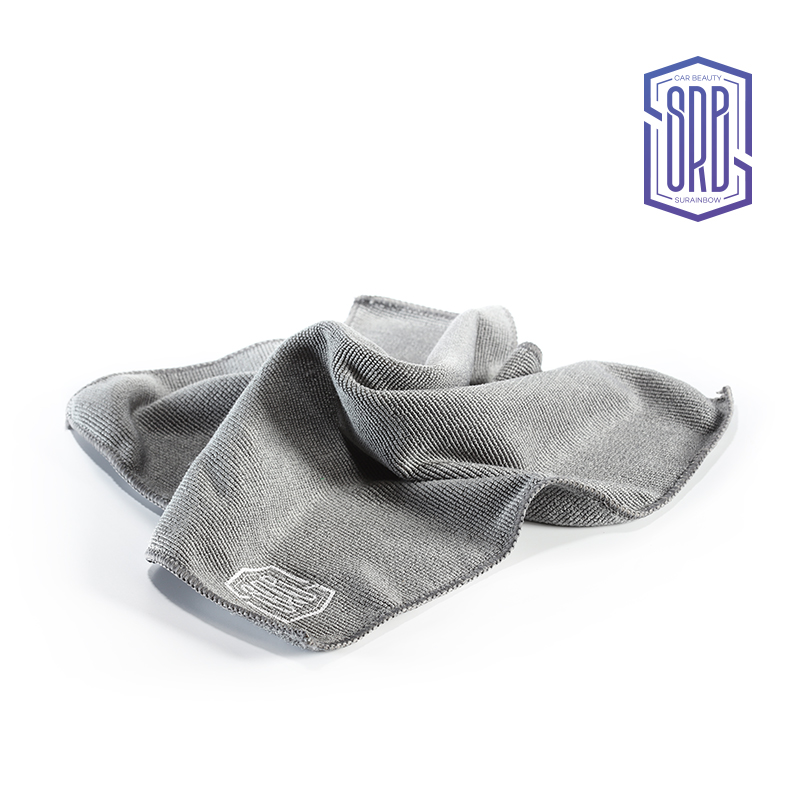
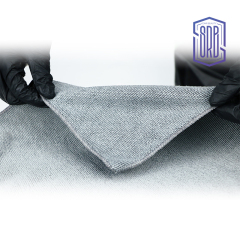
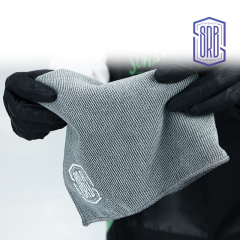
This is a 38 × 38 cm gray fiber towel made for the step where a car wax comes off the paint. Once the wax, sealant or polish has hazed on the panel, the residue has to be lifted rather than pushed around, and a dense, soft pile does that far better than a flat cloth. It lives with the rest of the car care supplies on the bay, next to the applicators, pads and bottles, because it is the last thing to touch the paint before the car goes back to its owner. Studios keep a folded stack within arm's reach rather than walking to a shelf halfway through a panel. Paste, liquid car wax or a spray sealant, the routine does not change much: spread the product, let it set, lift the film with a clean face and buff the panel even with a dry one. The towel is soft enough to cross a full panel without added pressure, which matters on a finish you have just corrected. Most of the volume goes to trade buyers — car wax wholesale programmes, detailing chains and private-label brands that want a towel to sit beside the wax they sell. One stock colour and one working size cover almost every order, with the option of your own label on top.
Fiber & Build
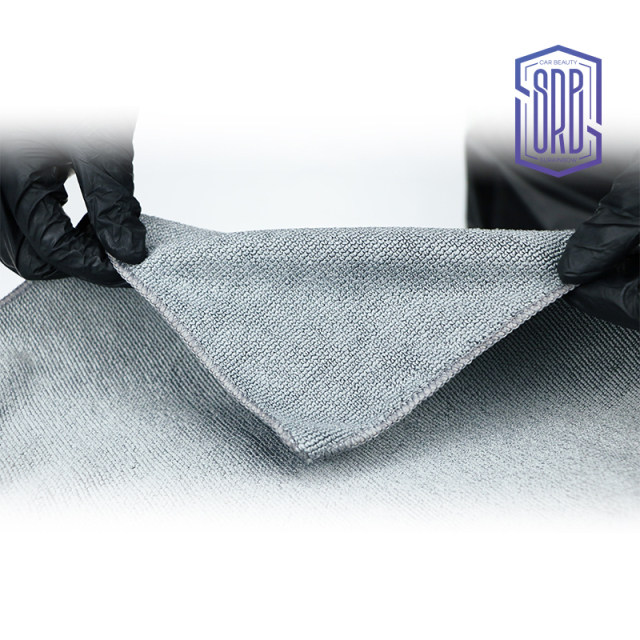
The cloth is built from fine synthetic fiber rather than a flat cotton weave. Those filaments open into a soft pile with a great many small edges, and those edges are what pick a wax film up instead of drawing it back across the panel.
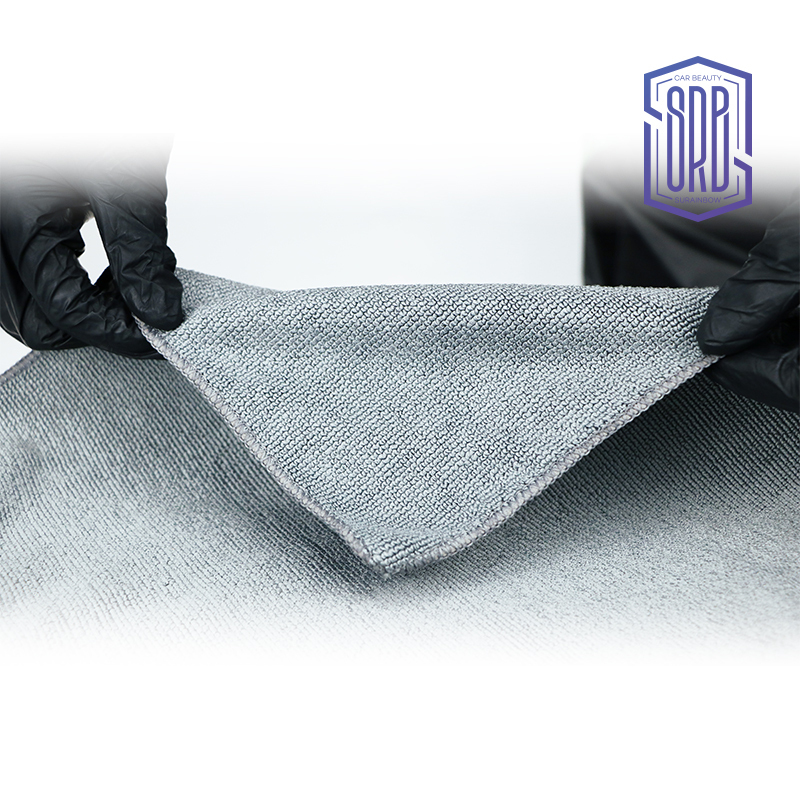
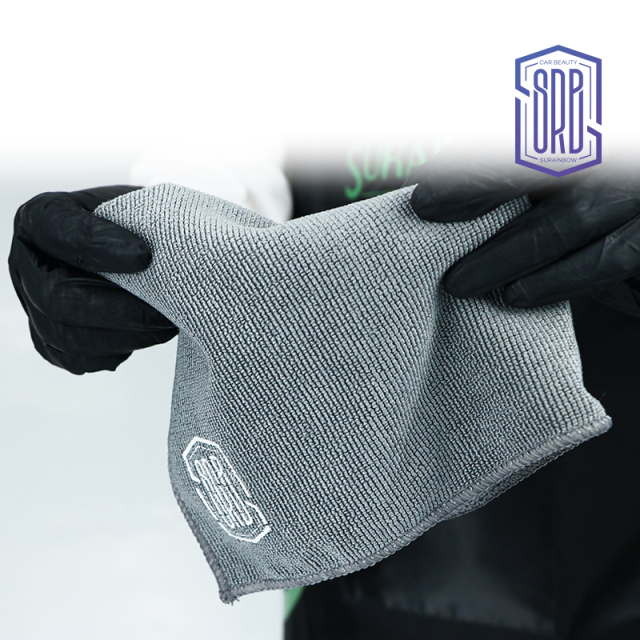
The face has a plush, tightly woven texture that keeps what it lifts. A towel that is too smooth pushes residue around the panel; one that is too coarse leaves marks of its own. This one sits between the two — soft against the paint and dense enough to hold what comes off.
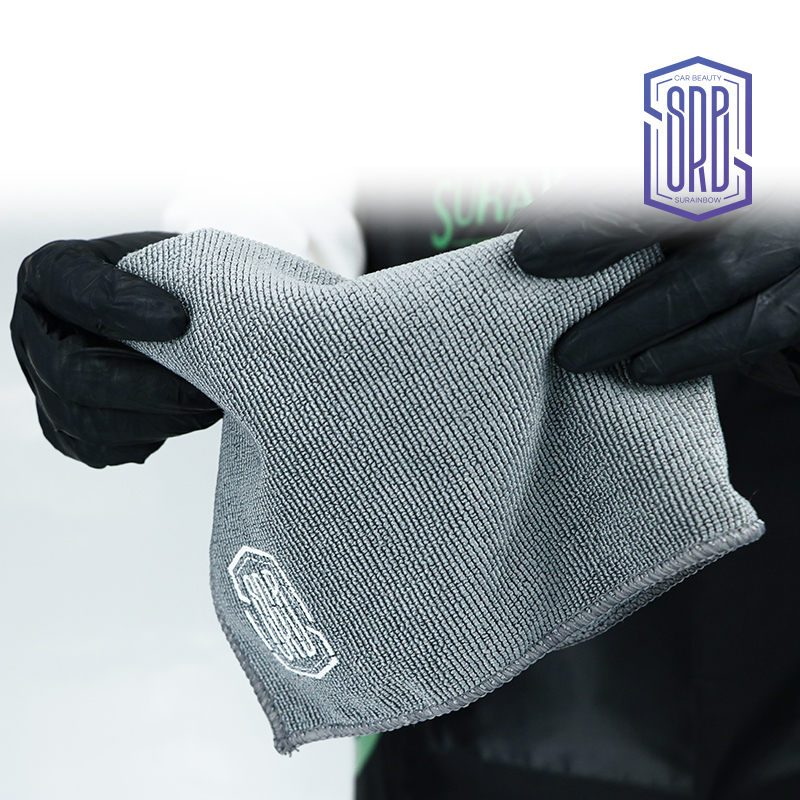
The edges are folded and stitched so the square keeps its shape through repeated washing. Around badges, trim and panel gaps, fold the towel so a flat face meets the paint and work with the folded edge rather than a loose corner.
The same pile takes up the fine dust left after machine work, which is why a clean towel usually follows car wax polish on the job sheet. Gray shows at a glance when a face is loaded and it is time to turn.
Wax & Polish Removal Workflow
- Apply the protection the way the product directs — a paste wax by hand, a liquid car wax by applicator, a spray sealant across the panel.
- Let it set.
- Follow the dwell on the tub or bottle, then test a corner with a fingertip: if the film smears instead of lifting cleanly, it needs a little longer.
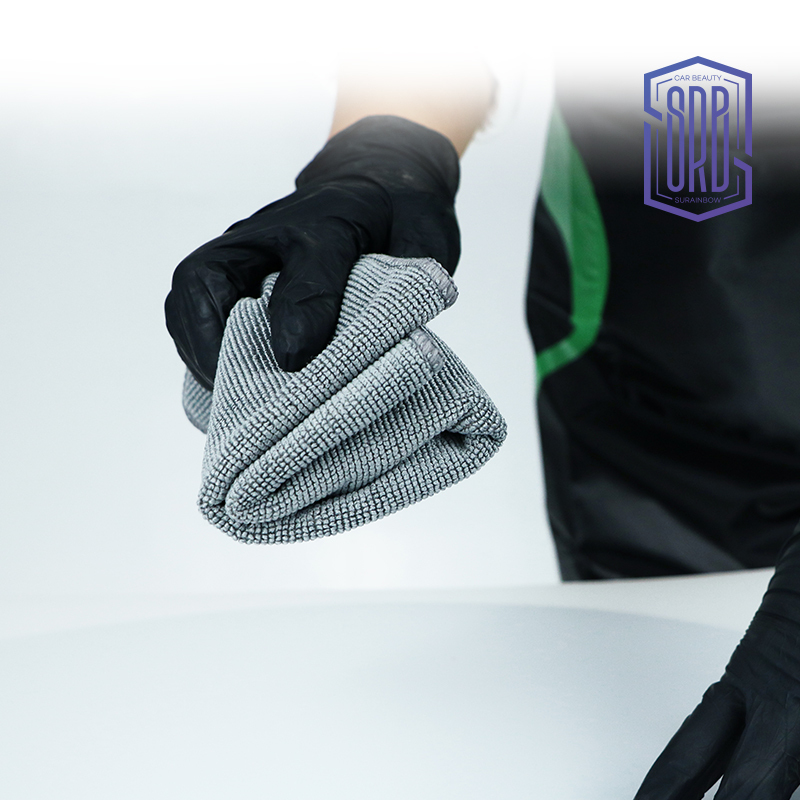
- Fold the towel into quarters. At 38 × 38 cm it becomes a palm-sized pad with four working faces, which is four clean passes before you reach for another towel.
- Take the first pass in straight lines with light pressure, one panel at a time, and watch the towel as you go rather than the paint.
- Turn to a dry face for the final buff.
- The dry side evens the shine and clears the last haze that a loaded face would only move around.
- With a car wax spray or quick detailer, mist one panel, spread with one face and buff with another; sprayed products load the pile faster than paste.
- Change the towel once a face stops grabbing.
- A saturated towel lifts nothing, and that is the usual reason a panel dries streaky.
Detailing Bay Applications
- Hand wax removal — the classic job: once a paste or spray wax has hazed, the towel lifts the film and buffs the panel even before handover.
- Polishing clean-up — after machine work, a clean face takes off car wax polish residue and dust without dragging it across freshly refined paint.
- Spray sealant and quick-detailer passes — a light mist of car wax spray or detailer is spread and buffed in the same visit, keeping a maintenance wash quick.
- Wash-and-wax film — after a wash that leaves a car wax cleaner film behind, one pass with a dry face evens the finish before the customer sees the car.
- Kit packing — detailing brands and car wax manufacturers fold one towel into each wax kit or promotional pack so the buyer has the right cloth from day one.
- Dealer prep and handover — a folded stack sits with the rest of the car care supplies at the handover bay for the final wipe over door shuts, sills and under the handles.
Specifications
| Property | Value |
|---|
| Type | Towel |
| Model | T-644 |
| Product name | Car Wax Towel |
| Material | Microfiber |
| Size | 38 × 38 cm |
| Colour | Gray |
| Function | Wipe the car wax |
| Brand | SURAINBOW |
| Place of origin | Guangdong, China |
| OEM | Accepted |
| Lint level | Low-lint |
| Absorbency | High |
| Sample | Available |
| Customisation | Private label and packaging on request |
Washing, Care & Reuse
- Rinse before washing.
- Towels that have carried heavy paste or a car wax cleaner residue clean up better when the worst of the wax is flushed out first instead of going straight into the wash water.
- Wash them on their own, away from linting fabrics, with a mild detergent and no fabric softener — softener coats the filaments and cuts absorbency.
- Keep the heat low and skip bleach; air dry or tumble on low, then fold them once they are fully dry.
- Keep a separate stack for polish work.
- A towel that has carried car wax polish residue is fine for the next compounding job but should not go back into the final-buff pile.
- Retire them in stages.
- When a towel stops grabbing or the edges begin to fray, move it to wheels, arches and door shuts instead of the paint.
- Store them dry and folded, away from grit and dust.
- A towel left open on a bench is the one that marks a panel.
Private Label, Sampling & Documents
- OEM service is accepted, so detailing brands and car wax manufacturers can put their own label on the folded towel instead of ours.
- For car wax wholesale programmes, the towel can be planned around your tub or kit count so a promotional pack goes out complete.
- If you are building a car care supplies range under one brand, the same label can run across your towels, waxes and shampoos.
- Start with a sample — ask your sales contact about sample availability and courier arrangements, then check the size, pile, edge and colour against what your customer expects.
- Seal the reference.
- An approved sample held by both sides becomes the physical comparison for the bulk run, so each batch can be checked against something real.
- Proof the packing.
- Label artwork, barcode data and carton marks are reviewed and approved before printing, and the approved version is what production follows.
- Documents.
- Tell your sales contact which documents your market requires and the team will confirm what can be prepared for your order.
- Batch reference.
- Every box carries one; if anything is short, damaged or questioned after delivery, the reference and photos let it be checked against the batch and the retained sample.
Ordering & Delivery
| Property | Detail |
|---|
| Minimum order | 100 pcs |
| Standard packing | 100 pcs per box |
| Box dimensions | 63 × 40 × 26 cm |
| Box gross weight | 13.000 kg |
| Availability | In stock and fast shipping |
| Payment terms | Confirmed with your sales contact |
| Shipping documents | Confirmed for your destination market |
| Order type | Stock boxes and car wax wholesale programmes |
| Supplied to | Detailing studios, distributors and car wax manufacturers |
Scale & Supply Capability
SURAINBOW is run by Guangzhou Liangdian Automotive Supplies Co., Ltd., a factory-trade operation set up in Guangzhou in 2010 and now 50 people strong. Sixteen years in car care have given us a one-stop supply position: our own SURAINBOW lines are held in stock for fast shipping, and an associate factory with modern production equipment and an established quality management system keeps replenishment moving. We take OEM and ODM work and our R&D team develops to your specification. Buyers in the Middle East, the United States, Southeast Asia, Europe, the UK, Russia, Africa and Australia already order from us.
FAQ
Will this towel leave lint or marks on dark paint?
The pile sheds very little lint, and the folded faces keep the working surface clean. Marks almost always come from grit or from a towel that has picked up dust, so shake it out, keep the faces off the bench and switch to a new face rather than pressing harder. On a dark panel, look at the finish in daylight after the car wax has been buffed off — that is the light that shows anything the bay lamps hide.
Can the same towel handle paste wax and a liquid car wax?
Yes, but the two load the pile differently. A paste wax leaves a drier film that clears from a face fairly quickly, while a liquid car wax soaks further into the fibers and retires a face sooner. On a liquid wax job, plan on two or three faces and keep one dry side for the final buff.
How should I work with spray products?
Spray products go on thin, so spread before you buff. Mist a single panel, spread it flat with one face, then buff with a dry one. A car wax spray also drifts onto glass and trim, so work panel by panel rather than misting the whole car in one pass.
Will it take off the film left by a car wax cleaner?
A light film from a wash-and-wax or a car wax cleaner comes off with one pass of a dry face once the panel is dry. If the film has baked in the sun, dampen a corner slightly, work it gently and buff dry. Heavy residue should be rinsed out of the towel before it goes into the wash.
How many towels will one car take?
On a light spray sealant, one towel is usually enough. A full hand wax on a large car can take two or three, because a loaded face stops lifting and starts spreading. Keep the used ones in a separate pile and let a folded towel do the work — stretching one cloth across a whole car is what produces streaks.