Product Overview
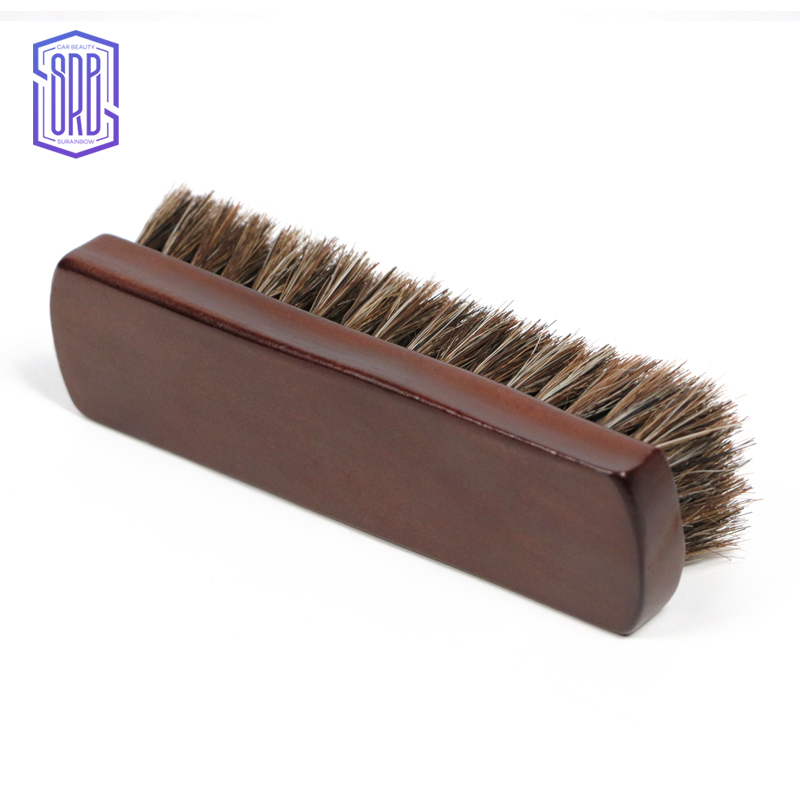
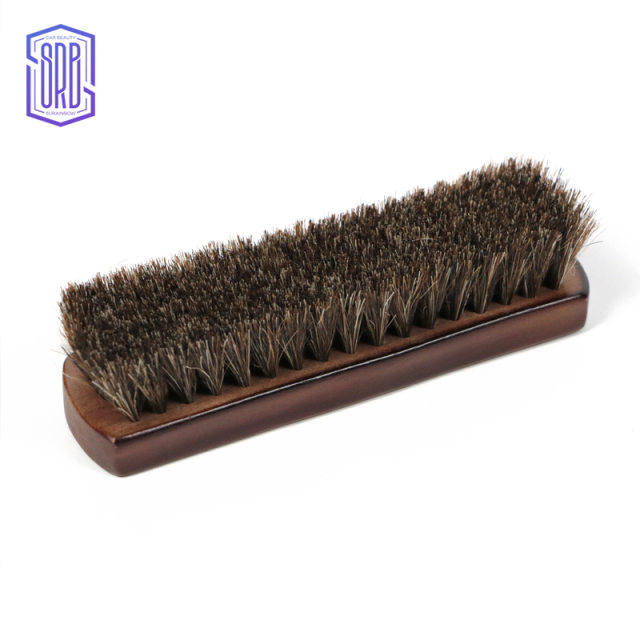
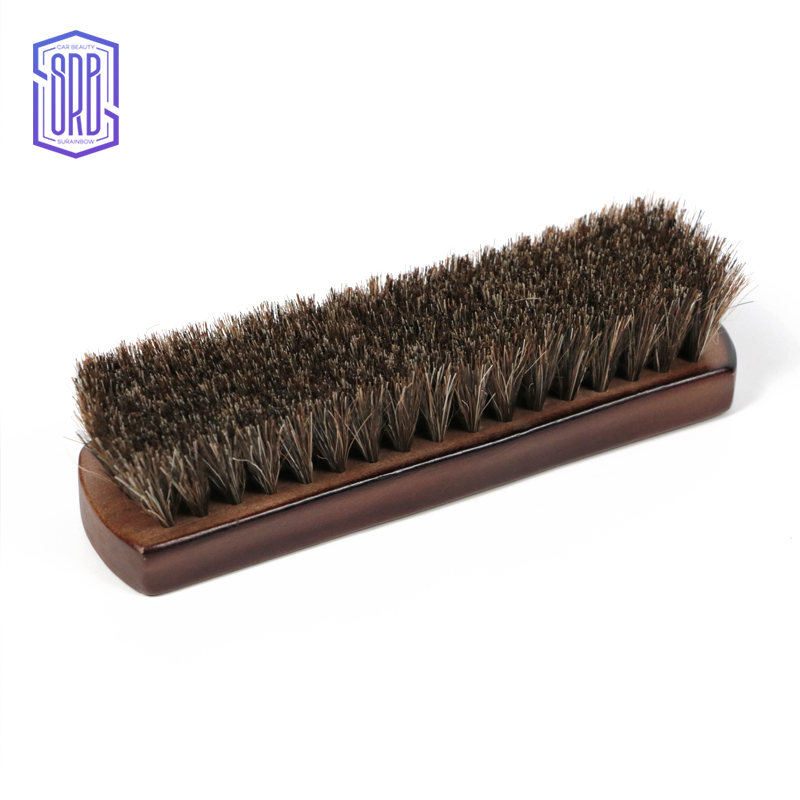
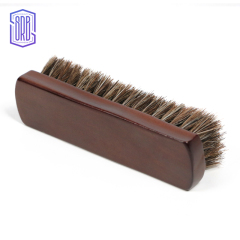
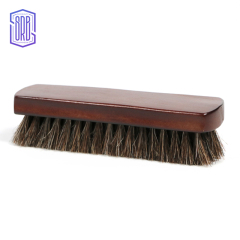
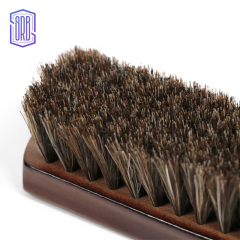
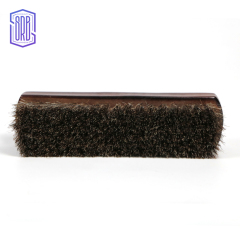
Leather seats take more brush work than any other interior surface. Seams, perforations, bolsters and piping all hold dust that a cloth pushes from one crease into the next, and a sponge never gets near the stitching. This wooden horse hair brush is built for that job: a full-size block of varnished beech set with dense natural horse hair, sized to run along a seam and then straight across a whole cushion without changing tools.
It is one of the cleaning tools for car interiors that a bay reaches for on every seat, every day, and it earns that place by staying simple — no power, no pads, nothing to restock. The brush does what the vacuum cannot reach and the cloth cannot lift, then it is rinsed and put back for the next car.
For car cleaning products manufacturers, a natural-bristle brush is the item shops ask for once the shampoo and the leather cleaner are already on the shelf, so it tends to stay in a range across seasons rather than being a single-season addition.
Horse Hair & Beech Wood Build
Two materials decide how this brush behaves: the horse hair, and the beech block it is set into.
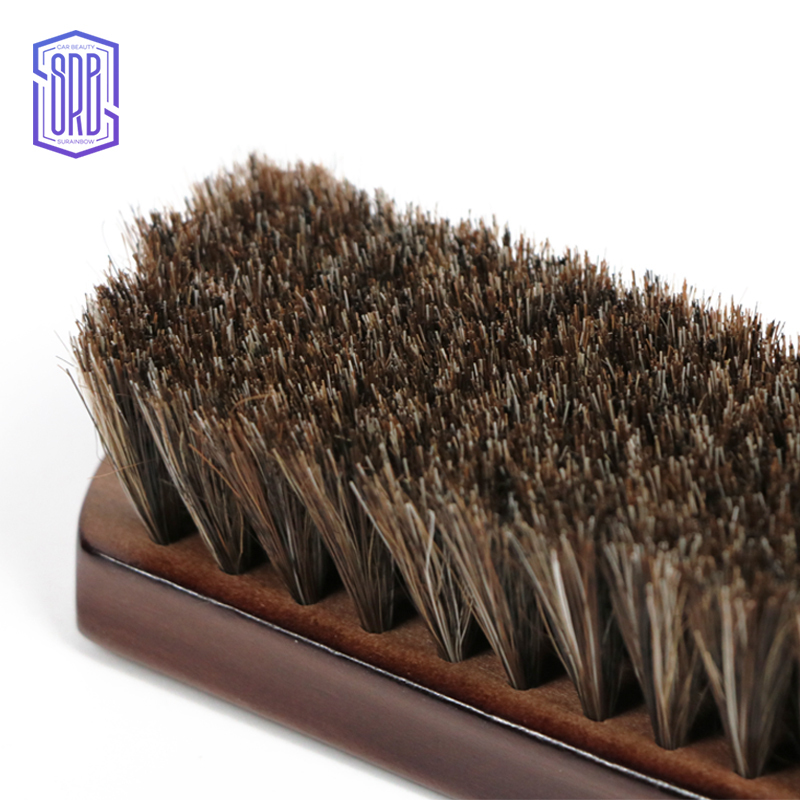
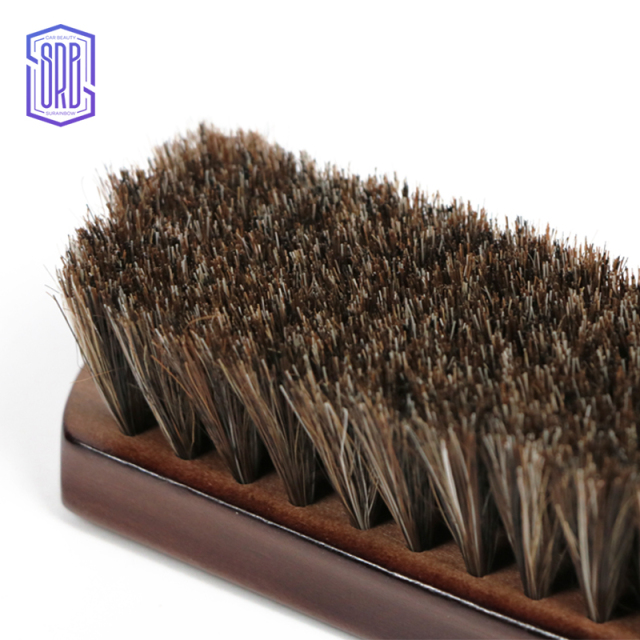
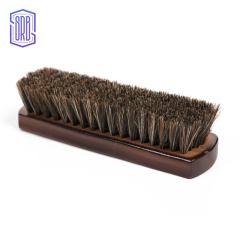
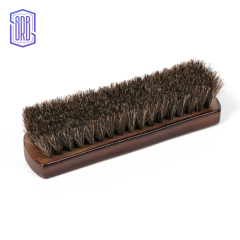
Horse hair is fine but springy. Each bristle tapers to a soft tip, so the part that touches the leather is gentle, while the length behind it carries enough resistance to work cleaner out of a seam instead of skating over it. Stiffer bristle — boar, or a hard synthetic — has its place on carpets, tyres and wheel faces, but on grained leather it tends to skip across the surface and catch on stitching.
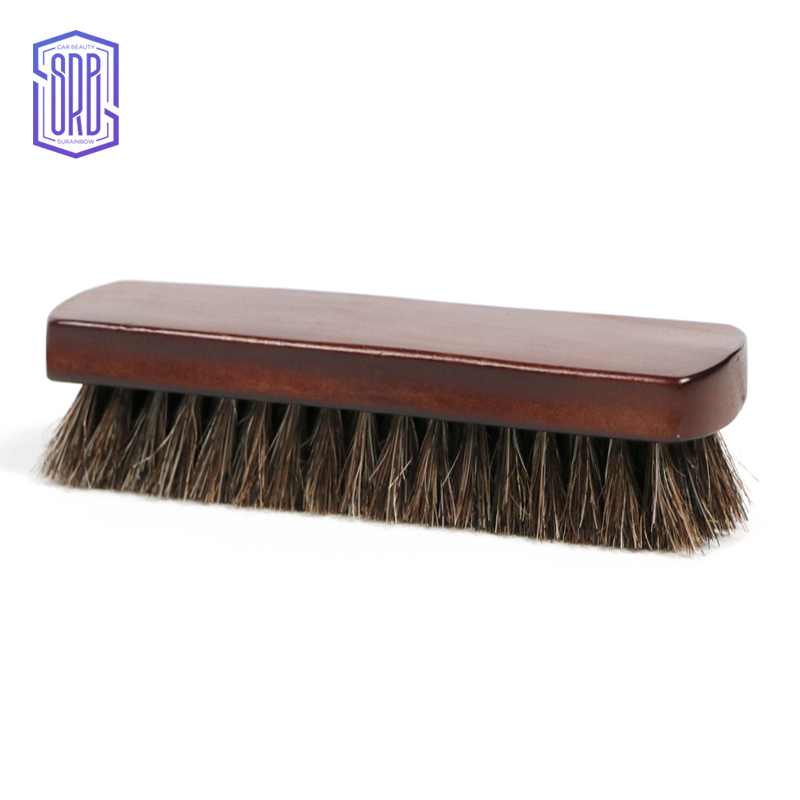
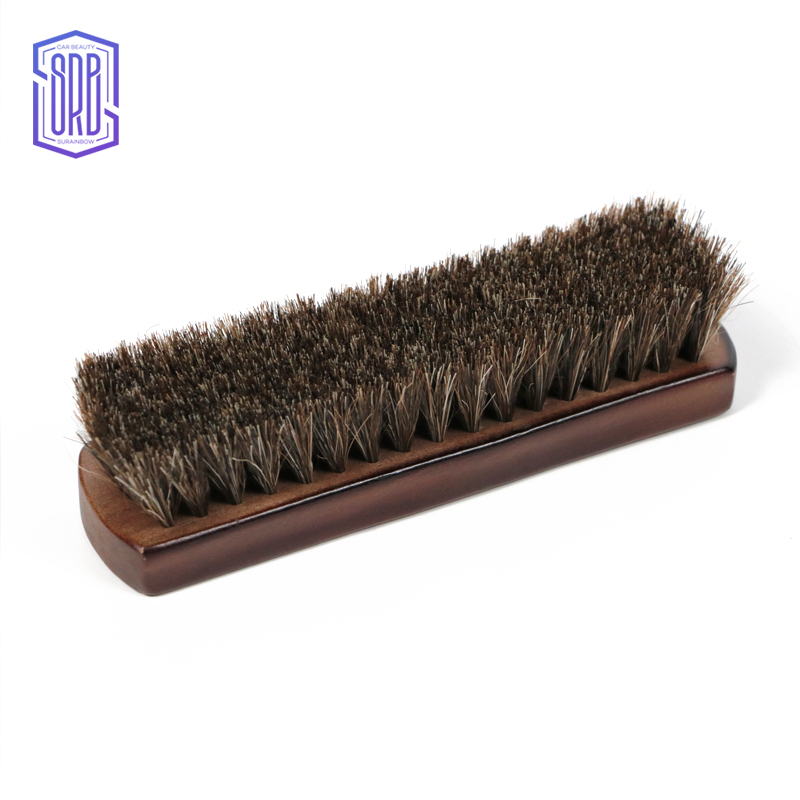
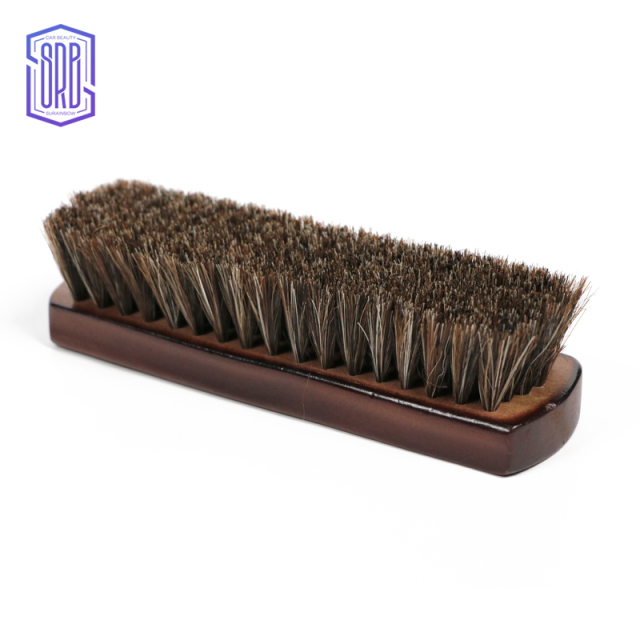
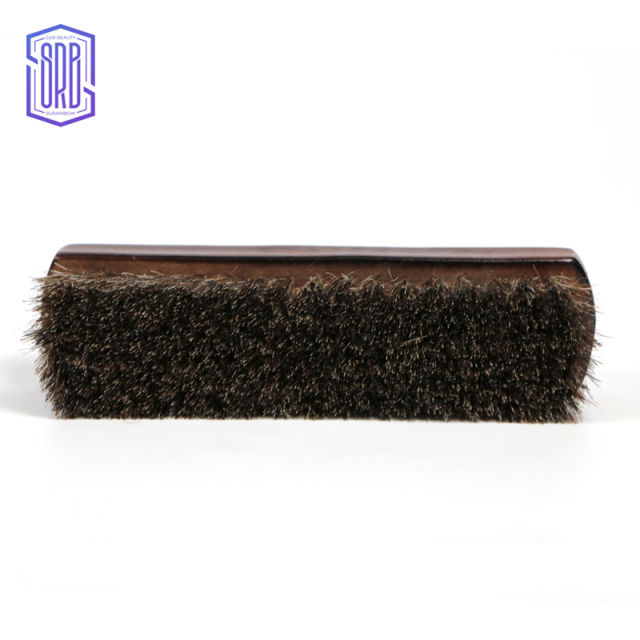
The bristles are set in dense rows into the wooden base. Dense tufting keeps the face flat as it wears, spreads pressure across the whole head instead of a few points, and stops a heavy-handed pass from digging into one spot on the hide.
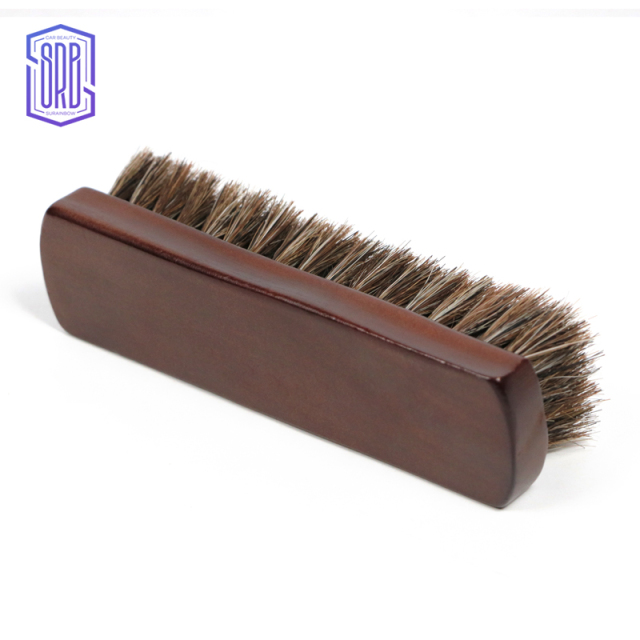
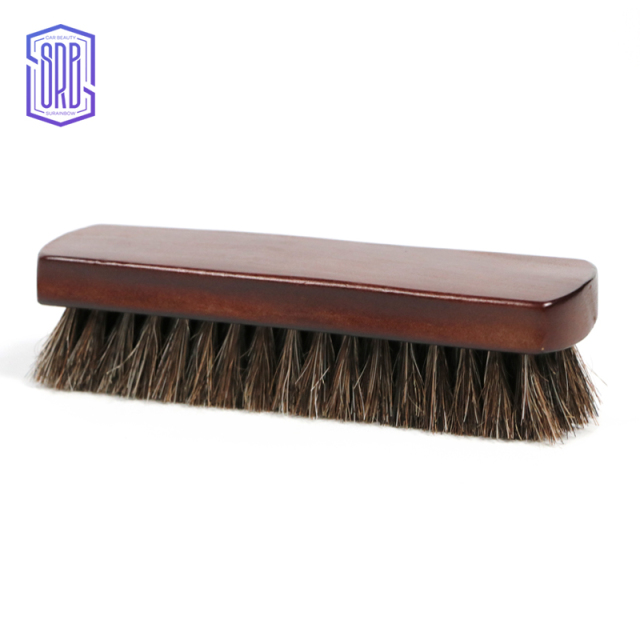
Beech is a tight-grained hardwood that takes a varnish cleanly, and this handle is varnished rather than left raw. The finish seals the block against the damp work it will see, keeps the surface smooth in the palm, and gives the brush its warm brown tone. Rounded edges mean no hard corner pressing into your hand halfway through an interior, and the flat top lets you push with the palm for steady pressure across a full cushion.
Because these are natural materials, wood grain and bristle tone vary slightly from brush to brush. That is normal in a wooden tool and does not change how it cleans.
Specifications
| Type | Interior cleaning brush |
| Model | T-633 |
| Bristle | Natural horse hair, densely set in rows |
| Handle | Varnished beech wood |
| Colour | Brown |
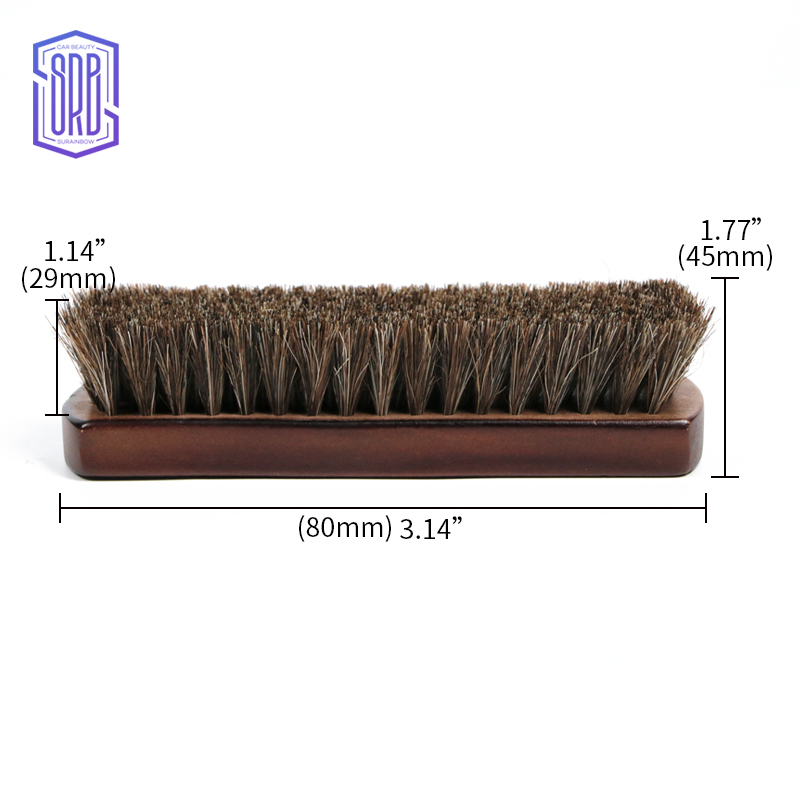
| Overall size | 17 x 5 x 4.5 cm |
| Body | Rectangular block with rounded edges |
| Bristle head | Fine natural bristles set into the wooden base |
| Intended use | Cleaning car leather seats |
| Brand | SURAINBOW |
| Origin | Guangdong, China |
Typical Applications
- Dealer pre-delivery and showroom prep: new cars arrive with dust packed into the seat stitching and along the bolster. A quick brush pass lifts it before the car goes onto the floor, with no spray or residue left to dry.
- Detailing studio interior bays: the brush is the agitation step between vacuuming and applying protection. It reaches the perforations, piping and seam lines that a microfiber cloth glides over.
- Used-car reconditioning: seats that have held years of body oil and sun cream need the cleaner worked in rather than wiped on. Fine horse hair opens the grain just enough for the cleaner to do its work.
- Mobile detailers and smart-repair units: no power, no pads, no bottle to carry — the brush goes in the bucket with the cloths and comes out for every interior job.
- High-volume wash bays: an express interior is mostly seats, and one full-size head covers a cushion in a few passes, so the car leaves the bay without the queue backing up.
- Leather specialists: it is one of the cleaning tools for car leather that stays on the trolley instead of in the cupboard, because it is used on nearly every vehicle that arrives.
Cleaning Sequence
- Vacuum the seat first and take a crevice tool into the seams. Loose grit left on the surface is what wears a bristle and what grinds into leather under a brush.
- Put the cleaner into the bristles, not onto the seat. Two or three pumps of a car detailing cleaner worked into the tips gives even coverage and stops the product pooling in low spots.
- Start at the seams and the stitching while the cleaner is at its strongest. Short strokes along the seam rather than across it, so the bristles follow the thread instead of lifting it.
- Move onto the flat cushion with your palm flat on the wooden block. Overlapping passes, light and even, so no area gets two hard scrubs while the next gets none.
- Use the edge of the block for bolsters, piping and the gap where the cushion meets the backrest — the corners of the head reach further than the middle.
- Lift the residue with a dry microfiber cloth before it dries. A second, clean cloth for the final wipe stops soil being spread back onto the seat.
- Give the seat a few minutes before protection goes on, so the leather is dry and the protection bonds to the hide rather than to leftover cleaner.
Brush Care & Storage
Treat the brush like a hand tool, not a consumable. After each car, rinse the bristles under lukewarm running water and work the residue out with your fingers — leather cleaner stiffens as it dries, and a stiff brush is a scratch waiting to happen. A drop of mild soap helps if the bristles feel tacky, and the rinse also clears the last of the car detailing cleaner before it sets.
Do not stand it bristle-down in a bucket or leave it soaking. Water wicks up through the bristle rows into the wooden block, and although the varnish slows that down, a long soak will lift the finish and swell the wood. Shake the water out, blot the bristles on a towel, and set the brush bristles-down on a rack, or flat with air underneath the head. Keep it off hot dashboards, radiators and direct sun, which soften the varnish over time.
Never put it through a dishwasher, boil it, or leave it standing in disinfectant. Reshape the bristles with your fingers while damp so the face dries flat rather than splayed.
Keep one brush for leather and nothing else. Wheels, tyres and engine bays carry grit that ruins a fine bristle in a single pass, and the residues from those areas have no place on a seat. At the end of the shift the brush goes back on the rack with the car care supplies, dry and ready — not tossed into the wash bucket.
Wholesale & Private Label
Most of the brush volume we ship goes out under someone else's name. OEM orders are accepted on this item, so it can be marked and packed for your label and your shelf rather than ours; the marking method and the pack are agreed with your sales contact before the artwork is signed off.
Two kinds of buyer use it that way. One is the distributor or e-commerce seller assembling a cleaning tools for car range who wants a natural-bristle option that does not look like the plastic brushes in every other catalogue. The other is a private-label brand adding a tool to a chemical line-up — often a car cleaning products manufacturer that wants the brush to sit beside its own shampoo and leather cleaner without looking like an afterthought.
That second route is why the car care supplies side of our range stays broad. A single order can combine the brush with microfiber cloths, applicator pads and the liquids the same shops already buy, so a container is filled from one supplier instead of three.
Plan the resale unit early. If the brush is going onto a peg or into a printed carton, tell us the pack you have in mind at the sample stage — a pack is far easier to change before print than after.
Sampling, Testing & Packaging Approval
- Send the requirement in one message: the item, the quantity you are planning, the destination market, and whether the brush will carry your own brand.
- Test the sample on the surfaces you actually clean. Check bristle density, how evenly the tufting sits, whether the varnish covers the edges, and how the head feels against a seat. Sample scope and any applicable sample or courier charges are confirmed with you before dispatch.
- Approve and seal a reference sample. Once both sides sign it off, the sealed brush becomes the comparison for bulk, including the natural variation you are willing to accept in wood grain and bristle tone.
- Proof the packaging before print. Pack format, label artwork, barcode and carton marks are approved in writing so the finished unit matches what you planned.
- Release bulk only after the sample and the artwork are both signed off.
Batch Consistency & After-Sales
- Checked against the sealed sample: every run is compared for bristle density, head size, varnish coverage and colour before it is packed.
- Traceable by batch: the order reference and batch number are recorded, so a question about one carton can be traced back to the run it came from.
- Second orders matter as much as firsts: for car cleaning products manufacturers, the reorder is the real test, so bulk is compared with the approved reference rather than with memory.
- What to send with a concern: the order or sample reference, the batch number, the affected quantity, clear photos or video, and a short description of how the brush was used.
- Response windows: packaging damage, shortages and leakage are reviewed when reported within 7 days of receipt, and product quality concerns within 30 days.
Ordering, Payment & Delivery
- Minimum order: 100 pcs. That is one carton line in a normal car care supplies order rather than a container commitment.
- Availability: in stock and fast shipping.
- Payment: credit or debit cards, PayPal, Apple Pay, Google Pay and Afterpay/Clearpay can be available. Confirm the accepted method, currency and payment schedule for your order with your sales contact.
- Dispatch confirmation: before the goods leave we confirm the inspection arrangement, payment status, document set, shipping method, consignee details and carton marks with you.
- Documents: a commercial invoice, packing list and customs documents are prepared with the shipment. Tell us at quotation what your market requires so the full set can be confirmed.
- Freight: courier through DHL, UPS or FedEx for small orders, and LCL, 20FT, 40GP or 40HQ sea freight for carton volumes. DDP arrangements by sea, air, rail or truck can be quoted for your destination.
- Timing: production and transit schedules are confirmed per order, so ask your sales contact for the current lead time before you plan a launch.
Scale & Supply Capability
SURAINBOW is run by Guangzhou Liangdian Automotive Supplies Co., Ltd., a factory-trade operation set up in Guangzhou in 2010 and now 50 people strong. Sixteen years in car care have given us a one-stop supply position: our own SURAINBOW lines are held in stock for fast shipping, and an associate factory with modern production equipment and an established quality management system keeps replenishment moving. We take OEM and ODM work and our R&D team develops to your specification. Buyers in the Middle East, the United States, Southeast Asia, Europe, the UK, Russia, Africa and Australia already order from us.
FAQ
Is the bristle real horse hair?
Yes — natural horse hair, set in rows into a varnished beech handle. Look closely at the face of the brush and you will see the bristles taper and vary slightly in tone; that inconsistency is the simplest sign of a natural fibre, and it is normal from one brush to the next.
Will it mark a coated or protected leather seat?
Not with normal use and light pressure. The risk on any seat comes from technique rather than from the bristle: keep the head flat on the panel instead of digging in with a corner, work in overlapping passes, and test an unfamiliar seat finish on a hidden section such as the underside of the cushion before you work a whole panel.
Can it be used wet with a leather cleaner?
Yes — damp, not soaked. Horse hair takes a light load of leather cleaner or a car detailing cleaner without matting, and you work with the bristles so the wooden block stays out of the wet. Keep the load light on coated leather: a damp brush lifts soil, an over-wet one only moves it around.
How does this compare with the smaller horse hair brush?
This is the full-size version, made for cushions, bolsters and door cards. The 10.5 cm brush in the same family is the companion for places a full head cannot follow — piping, stitching lines and narrow console gaps. Shops that do a lot of interiors usually keep both within reach.
Does it work on anything other than seats?
The brush is specified for leather seats, and that is where most of them are used. Interior teams also run it over leather door cards, armrests and steering wheel leather with the same light pressure. It will clean vinyl and plastic trim too, but the fine horse hair is most effective on grained and stitched leather.
How should I treat perforated or ventilated leather?
Keep the pressure light and brush across the perforations rather than pushing product down into them, then blot straight away with a microfiber cloth. A dry pass before any liquid goes on is worth the extra minute, because it lifts the grit that would otherwise be pushed into the holes. On a heavily soiled panel, work in two light passes rather than one heavy one.